
Banarasi vs. Kanjeevaram: Decoding India’s Most Luxurious Silks
- Srikanth
- July 8, 2026
- Blog
- 8 minutes
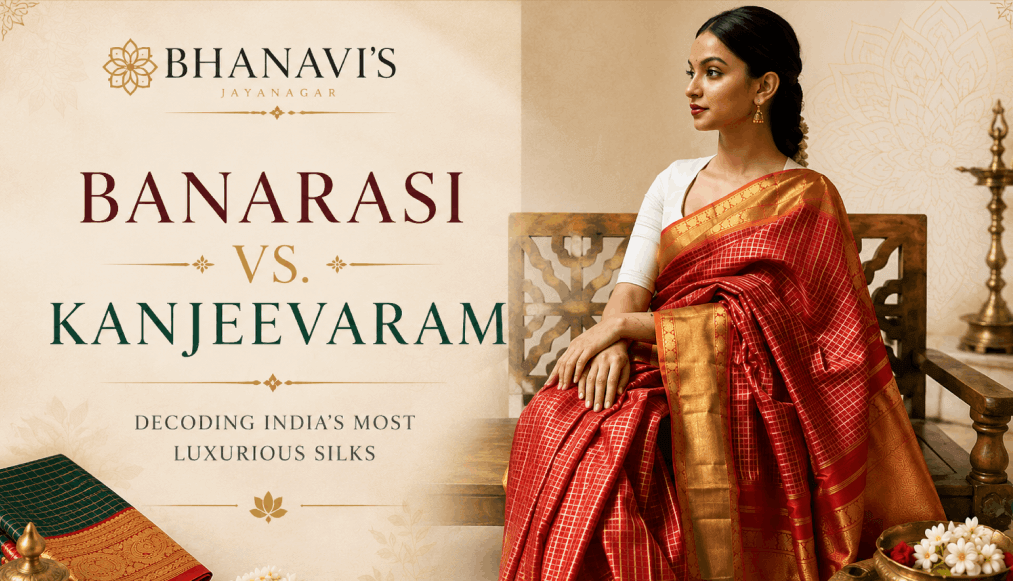
There are few garments in the world that can claim the kind of reverence reserved for an Indian silk saree. They are not merely articles of clothing. They are repositories of history, living museums of craftsmanship, and enduring symbols of a civilisation that has celebrated textiles as an art form for thousands of years. Among India’s many celebrated handwoven traditions, two names have come to define the very pinnacle of luxury: the Banarasi silk of North India and the Kanjeevaram silk of the South. Both are masterpieces in their own right, yet they could not be more different in character, craftsmanship, and cultural identity.
For anyone looking to invest in a truly exceptional silk saree, the choice between a Banarasi and a Kanjeevaram is rarely straightforward. Both are heirloom-worthy. Both are painstakingly handcrafted. Both have adorned queens, brides, artists, and women who understand that true luxury is measured not by labels but by the hands that create it. Yet each tells a different story. One whispers of the sacred ghats of Varanasi, where silk has flourished under the patronage of emperors and master artisans for centuries. The other echoes the grandeur of South Indian temples, where architectural splendour, mythology, and devotion have inspired generations of weavers. Understanding these two extraordinary traditions is not simply a lesson in fashion. It is an invitation to appreciate the remarkable diversity of India’s textile heritage.
| Feature | Banarasi Silk | Kanjeevaram Silk |
|---|---|---|
| Origin | Varanasi, Uttar Pradesh | Kanchipuram, Tamil Nadu |
| Inspiration | Mughal & Persian art | South Indian temples & mythology |
| Silk Type | Fine silk with zari brocade | Pure mulberry silk |
| Weaving Technique | Intricate brocade weaving with metallic zari | Body, border & pallu woven separately and interlocked |
| Texture | Soft, smooth & lightweight | Rich, thick & structured |
| Drape | Fluid and graceful | Crisp, regal and well-defined |
| Durability | Strong with proper care | Extremely durable and heirloom-worthy |
| Signature Motifs | Floral vines, Paisleys, Butis, Jaal patterns | Temple borders, Peacocks, Lotus, Yali, Rudraksha |
| Design Style | Delicate, intricate and elegant | Bold, vibrant and architectural |
| Borders | Elegant woven borders | Wide contrasting borders |
| Zari Work | Fine, detailed brocade | Bold and prominent zari work |
| Colour Palette | Soft pastels, rich jewel tones, traditional reds | Bright contrasting colours, gold, maroon, green, royal blue |
| Weight | Lightweight to medium | Medium to heavy |
| Best For | Receptions, festive occasions, elegant celebrations | Weddings, traditional ceremonies and bridal wear |
| Bridal Appeal | Royal North Indian elegance | Grand South Indian bridal tradition |
| Craftsmanship Time | Several weeks to months | Several weeks to months |
| Investment Value | Luxurious heirloom with timeless appeal | Highly durable heirloom passed through generations |
| Ideal For | Those who prefer intricate detailing and graceful drapes | Those who love bold designs, rich texture and traditional grandeur |
Two Cities, Two Legacies
Every great textile tradition begins with a place, and few places have shaped Indian craftsmanship as profoundly as Varanasi and Kanchipuram.
Nestled along the banks of the River Ganga, Varanasi has been one of the world’s oldest continuously inhabited cities and a renowned centre of silk weaving for centuries. The Banarasi saree evolved through a fascinating exchange of Indian craftsmanship and Persian artistic influences, particularly during the Mughal era. Floral vines, intricate jaals, elegant paisleys, and elaborate brocade patterns became defining characteristics of the weave, creating textiles that reflected both imperial refinement and Indian artistry. Over generations, weaving families transformed these influences into a uniquely Indian tradition that continues to captivate connoisseurs across the world.
Several hundred kilometres away in Tamil Nadu lies Kanchipuram, a city often celebrated as the “Silk City of India.” Here, the story of silk is inseparable from the towering temple complexes that dominate its landscape. Temple sculptures, carved pillars, sacred geometry, and ancient mythology inspired motifs that remain central to Kanjeevaram weaving even today. Every border, every geometric pattern, every stylised peacock or yali carries echoes of South India’s architectural and spiritual heritage. Unlike the delicate intricacy often associated with Banarasi silk, Kanjeevaram celebrates boldness, structure, and enduring strength.
These cities did not simply produce textiles. They nurtured artistic ecosystems where weaving became a way of preserving culture itself.
The Difference Lies in the Loom
At first glance, both sarees appear equally luxurious. A closer look reveals two entirely different philosophies of weaving.
Banarasi silk is admired for its remarkably intricate brocade work. Fine silk yarns are woven together with metallic zari threads to create elaborate motifs that often appear almost embroidered into the fabric. The weave feels fluid, graceful, and luminous. The artistry lies in extraordinary detail. A single saree may contain thousands of tiny woven elements that collectively create a design so seamless that it resembles a painting brought to life through silk.
Kanjeevaram weaving, by contrast, is defined by structural brilliance. Traditionally crafted from high-quality mulberry silk, the saree is celebrated for its durability, rich texture, and architectural precision. One of its most remarkable features is the traditional technique of weaving the body, border, and pallu separately before joining them together through an exceptionally strong interlocking process. This method produces the striking colour contrasts for which Kanjeevaram sarees are famous while ensuring that the saree remains extraordinarily resilient, often lasting for generations with proper care.
It is this engineering as much as artistry that has earned Kanjeevaram its legendary reputation among textile historians and collectors.
Motifs That Speak the Language of Culture
Every motif woven into silk carries meaning, whether symbolic, spiritual, or historical.
Banarasi sarees are celebrated for floral vines, intricate butis, Persian-inspired jaals, mango motifs, and decorative patterns influenced by Mughal gardens and royal court aesthetics. Their beauty lies in elegance and complexity. They invite the viewer to come closer, rewarding attention with ever finer details hidden within the weave.
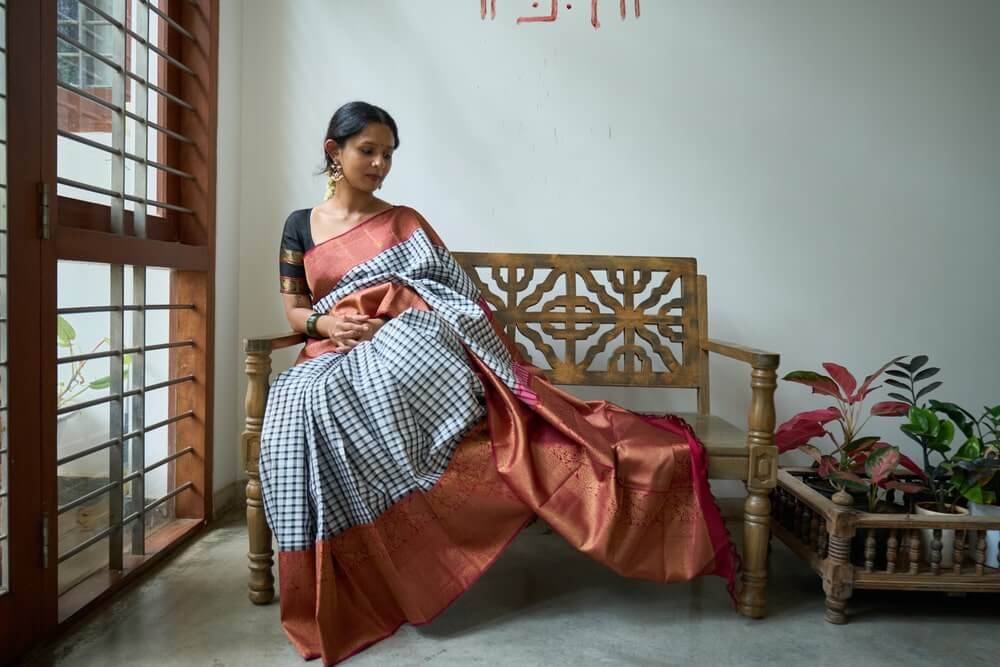
Kanjeevaram motifs possess an altogether different visual language. Temple borders, rudraksha patterns, checks, stripes, peacocks, elephants, parrots, lotuses, and mythical yali figures reflect centuries of South Indian artistic traditions. Rather than emphasising delicate intricacy, these motifs communicate strength, symmetry, and sacred symbolism. Every design feels deliberate, balanced, and monumental, much like the temples that inspired them.
Neither tradition is superior. Each reflects the cultural imagination of its region with extraordinary authenticity.
Texture, Weight, and the Art of Draping
The experience of wearing these two silks is as different as their appearance.
A Banarasi saree often feels softer, more fluid, and naturally graceful. Its elegant drape allows the brocade work to catch changing light beautifully, making it particularly suited to receptions, evening celebrations, and occasions where effortless sophistication takes centre stage. The fabric falls gently around the body, creating movement that appears almost lyrical.
A Kanjeevaram saree possesses greater structure. The silk has a substantial weight that allows the pleats to remain crisp while giving the pallu remarkable definition. When draped, it creates a majestic silhouette that immediately commands attention. This distinctive structure explains why generations of South Indian brides continue to choose Kanjeevaram for their wedding ceremonies. The saree carries itself with quiet authority, requiring little embellishment to create an unforgettable impression.
Neither drape is better. They simply express different ideas of elegance.
Which Silk Defines Bridal Luxury?
Both Banarasi and Kanjeevaram have become synonymous with Indian bridal fashion, yet they embody two distinct bridal aesthetics.
A Banarasi bridal saree evokes old-world romance. Its shimmering zari, intricate floral patterns, and regal softness create a look that feels poetic, timeless, and steeped in North India’s royal traditions. It pairs beautifully with heritage jewellery, heirloom accessories, and classic bridal styling that celebrates understated grandeur.
A Kanjeevaram bridal saree, meanwhile, radiates ceremonial magnificence. Rich jewel tones, bold contrast borders, and architectural motifs create an unmistakable sense of occasion. The saree becomes the visual centrepiece of the wedding itself, reflecting centuries of South Indian customs where silk plays an integral role in sacred rituals and family traditions.
The choice often depends less on fashion than on personal heritage, regional customs, and emotional connection.
Investing in an Heirloom
Luxury today is increasingly defined by authenticity, craftsmanship, and longevity rather than fleeting trends. In that sense, both Banarasi and Kanjeevaram stand apart from mass-produced fashion.
Every authentic handwoven silk saree represents weeks, and sometimes months, of painstaking labour by skilled artisans who have inherited their knowledge across generations. No machine can fully replicate the subtle irregularities, precision, and character of a handloom weave. Every completed saree carries the invisible signatures of the craftspeople who created it.
An investment in either silk is therefore not simply a purchase. It is a commitment to preserving India’s extraordinary handloom traditions and supporting weaving communities whose artistry continues to define the country’s cultural identity.
Perhaps that explains why these sarees are so rarely discarded. They are carefully folded after celebrations, wrapped in soft muslin, aired occasionally, and passed from one generation to the next. Years later, a daughter or granddaughter unfolds the same silk and discovers that its beauty has not faded. Along with its colours and motifs come memories of weddings, blessings, family photographs, and stories told around festive gatherings.
In an age where fashion often changes with every season, Banarasi and Kanjeevaram remind us that true luxury is timeless. They ask us to slow down, to appreciate the patience of the artisan, the rhythm of the loom, and the cultural wisdom woven into every thread. Choosing between them is not about deciding which is more luxurious. It is about deciding which story you wish to carry forward.
Whether your heart is drawn to the ethereal elegance of a Banarasi or the majestic grandeur of a Kanjeevaram, you are not simply choosing a saree. You are embracing one of India’s greatest artistic traditions, a legacy woven in silk that continues to inspire admiration across generations and across the world.
Frequently Asked Questions (FAQ)
Which is generally heavier, a Banarasi or a Kanjeevaram saree?
Traditional bridal Kanjeevarams tend to be heavier because they use thicker, twisted mulberry silk threads and very dense, solid zari borders. However, it’s important to note that lightweight, modern versions of both sarees are now widely available for easier draping and longer wear.
Can I wear a Banarasi silk saree for a traditional South Indian wedding?
Absolutely! While a Kanjeevaram is the strictly traditional choice for the main Muhurtham (morning ceremony), many modern South Indian brides are choosing to wear stunning Banarasi silk sarees for their evening receptions or pre-wedding ceremonies to enjoy a softer, more fluid aesthetic.
How do I maintain and care for these expensive silk sarees?
Both Kanjeevaram and Banarasi sarees require strict professional dry-cleaning. Never wash them at home. Store them wrapped in a breathable cotton or muslin cloth (never plastic), and be sure to unfold and refold them along different crease lines every few months to prevent the delicate zari from breaking.
Table of Contents
Share On:
Related Articles
Insights, inspirations, and the art behind every weave.
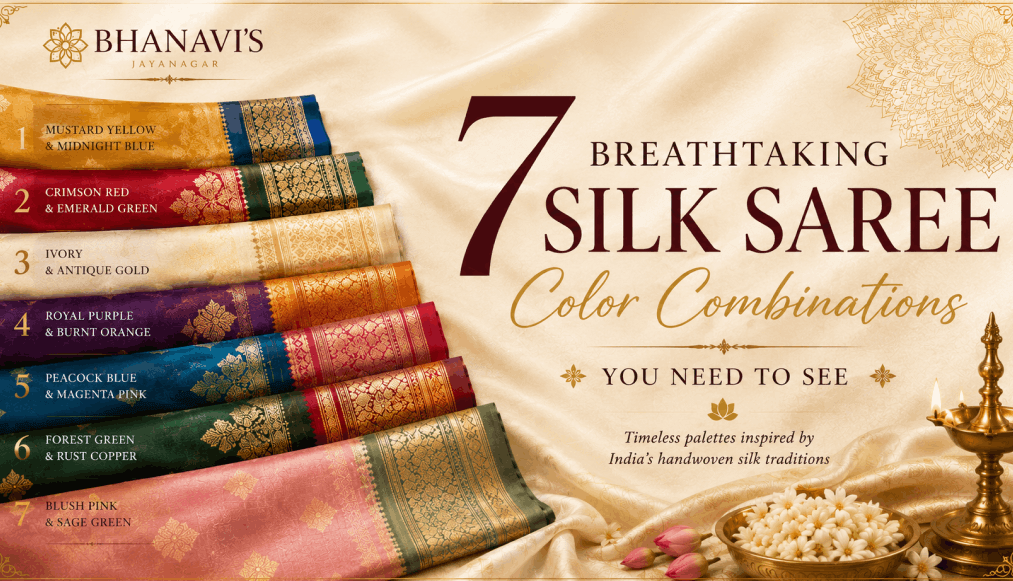
7 Breathtaking Silk Saree Color Combinations You Need to See
Colour has always been the first language of fashion. Before a silhouette is admired or a fabric is
The Ultimate Kanjeevaram Care Guide: How to Preserve Your Silk Heirloom
Some possessions become more valuable with age. A handwritten letter, an antique piece of jewellery, a family photograph,
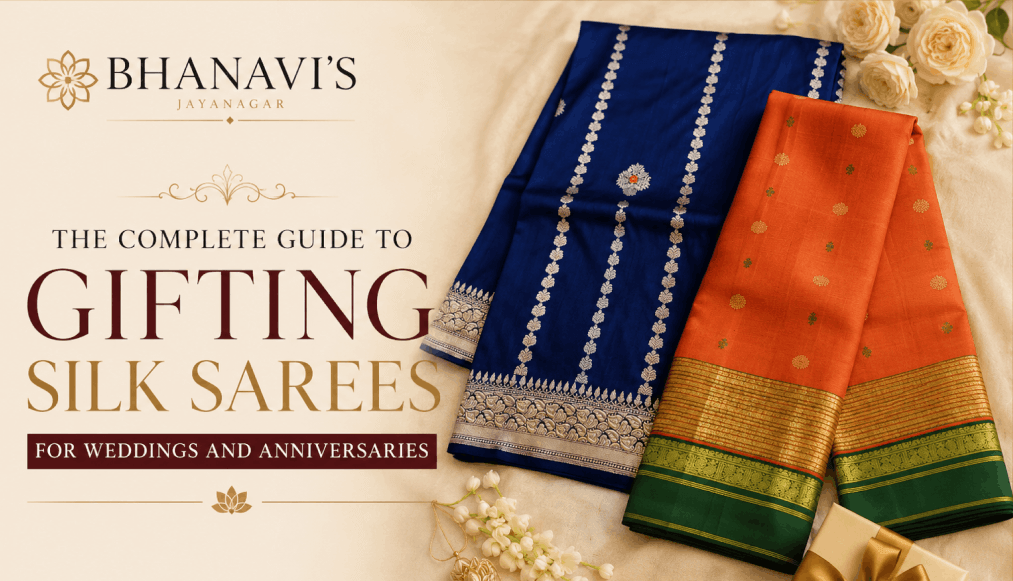
The Complete Guide to Gifting Silk Sarees for Weddings and Anniversaries
There are gifts that delight for a season, and there are gifts that become part of a family’s
Wedding Saree Styling: How to Accessorize Your Bridal Silk Like a Queen
A wedding saree is never just six or nine yards of fabric. It is memory woven into silk,
How to Identify Pure Kanjivaram Silk Sarees: Complete Buying Guide
In the world of Indian handlooms, few textiles command the reverence and prestige of the Kanjivaram silk saree.
Top Bridal Silk Sarees for Weddings in 2026
Indian weddings have always been a celebration of heritage, craftsmanship, and timeless style. In 2026, bridal fashion is
How to Choose the Perfect Saree for Weddings, Festivals & Special Occasionsx
There are few garments in the world as versatile, expressive, and timeless as the Indian saree. It can
The Timeless Charm of Kanjeevaram Sarees: Why They Remain Every Woman’s Heirloom
For over 400 years, Kanjeevaram sarees have remained the crown jewel of Indian textiles