A pure Kanjeevaram silk saree is more than just a garment; it is a timeless heirloom, a piece of wearable art, and a symbol of South Indian cultural heritage. Celebrated globally for its rich, lustrous texture, vibrant hues, and the incorporation of pure gold and silver zari, an authentic Kanjeevaram is the pride of any woman’s wardrobe.
However, with its immense popularity comes a significant challenge: the market is heavily flooded with powerloom imitations, synthetic alternatives, and “half-fine” or tested zari counterfeits. When you are investing your hard-earned money into what you believe is a genuine piece of Kanchipuram’s legacy, you must be equipped with the knowledge to verify its purity.
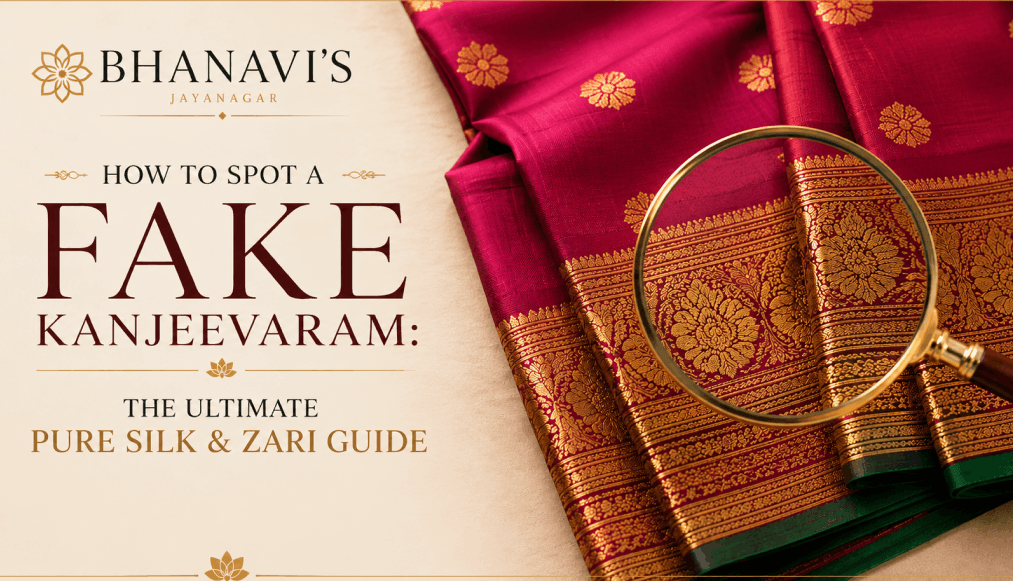
Here is your comprehensive, step-by-step guide to pure silk saree identification and spotting a fake Kanjeevaram.
The Origins: Why Are They Copied?
Originating from the temple town of Kanchipuram in Tamil Nadu, genuine Kanjeevaram sarees are handwoven using pure mulberry silk threads. The process is incredibly labor-intensive. It can take a skilled weaver anywhere from 10 to 30 days to complete a single saree, especially a Heritage Red Bridal Kanjeevaram.
Because the genuine materials (mulberry silk, pure silver, and gold) are expensive and the labor is highly skilled, powerlooms attempt to replicate the look using cheap polyester or art silk, producing hundreds of sarees a day.
1. The Definitive Silk Burn Test
One of the most reliable and definitive ways to test the purity of silk is the burn test. While you cannot do this in the middle of a showroom floor, you can ask the vendor to pluck a few loose warp or weft threads (usually available at the unstitched, raw edge of the pallu).
– Pure Silk Reaction: When ignited, pure silk burns slowly. It will turn into a crisp, dark, crumbly ash. More importantly, because silk is a natural protein fiber, it will smell exactly like burnt hair.
– Fake/Synthetic Silk Reaction: Synthetic fibers like polyester or rayon will melt rather than burn. They leave behind a hard, plastic-like bead that cannot be crushed. The smoke will smell like burning plastic or chemicals.
2. The Zari Scratch Test
The hallmark of a truly magnificent Kanjeevaram is its zari. Authentic, pure zari consists of three layers: a red silk thread core, wrapped in pure silver wire, and finally electroplated or dipped in 22-carat gold.
To test this, find an inconspicuous corner of the saree (perhaps inside the pallu fold). Gently lightly scratch or scrape the zari wire.
– Genuine Zari: Will reveal the distinct red silk core beneath the layers of silver and gold.
– Fake Zari: If it is a copper-based “half-fine” zari or synthetic plastic zari, it will either show a white core or remain a uniform metallic color.
3. Look for the Silk Mark Certification
The Government of India established the Silk Mark Organisation to protect consumers and weavers alike. The Silk Mark is a certification ensuring that the product is made of 100% natural silk.
Always look for the genuine Silk Mark tag—which includes a unique hologram and a QR code—when purchasing your Kanjeevaram saree. It is an immediate, verifiable indicator of authenticity.
4. The Weight, Texture, and Drape
A genuine handwoven Kanjeevaram saree possesses a distinct, luxurious weight. Pure mulberry silk is dense. When you hold a genuine Kanjeevaram, it feels substantial, yet when draped, it is incredibly supple and molds to the body beautifully.
Powerloom copies often feel unusually light, stiff, paper-like, and lack the rich, fluid drape of handloom silk. Furthermore, authentic silk naturally regulates temperature—it feels warm in winter and cool in summer—whereas synthetic silk will make you sweat.
5. Check the Reverse Side (The Pallu and Border Joints)
The weaving techniques used in Kanchipuram are unique and practically impossible to replicate perfectly on a machine.
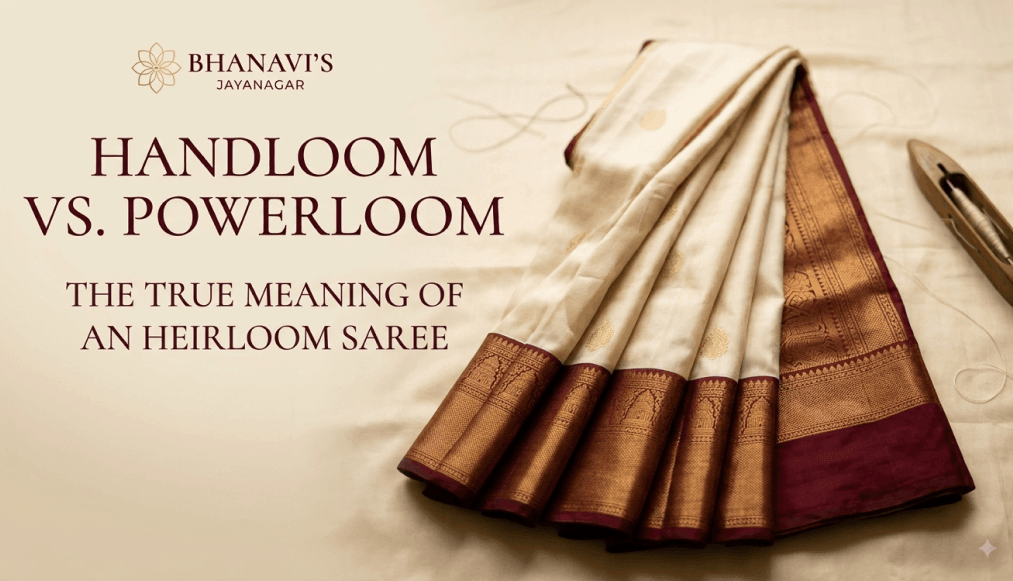
– The Korvai Technique: Authentic Kanjeevaram sarees often employ the Korvai technique to attach a contrasting border to the main body. If you look closely at the joint, you will see a slightly uneven, interlocking zigzag weave.
– The Petni Technique: Similarly, the Petni technique is used to attach the pallu to the body. If you check the reverse side of the saree where the pallu meets the body, a genuine handloom saree will show a visible, somewhat uneven interlocking woven joint.
– The Powerloom Fake: Powerloom sarees usually have a seamless, machine-perfect continuation because the body and border are woven as one piece, or they might just feature a simple machine-stitched line.
6. The Price Factor
While we all love a good deal, pure silk and real gold/silver zari are precious commodities with fixed market rates. If a vendor is offering a “pure Kanjeevaram” at a price that seems too good to be true, it almost certainly is a powerloom fake or an art-silk replica.
Investing in an authentic Kanjeevaram is an investment in generations of heritage. Whether you are looking for a Classic Red and Black Kanjeevaram or exploring modern pastels, ensure you buy from trusted sources. Explore our certified collection of authentic kanjeevaram sarees to experience true handwoven luxury that you can pass down with pride.
Frequently Asked Questions (FAQ)
What is the easiest way to test if a Kanjeevaram is pure silk? The silk burn test is the easiest. Pure silk burns slowly and smells like burnt hair, turning into a crushable ash. Synthetic silk melts and smells like plastic.
How can I tell if the zari on my Kanjeevaram is real gold and silver? Gently scratch the zari. Authentic Kanjeevaram zari has a red silk core wrapped in silver and dipped in gold. Fake zari will show a white or metallic core.
What is the Silk Mark certification? It is a certification by the Government of India ensuring the product is 100% natural silk. Always look for the hologram and QR code.
Why do powerloom fakes cost less than handloom Kanjeevarams? Powerlooms use cheap synthetic threads or half-fine zari and mass-produce sarees quickly, whereas authentic handloom requires expensive raw materials and weeks of skilled labor.